+8809 6060 03638



Month: April 2026
Harnessing AI for Impact: A New Chapter for Dnet & iSocial
April 22, 2026
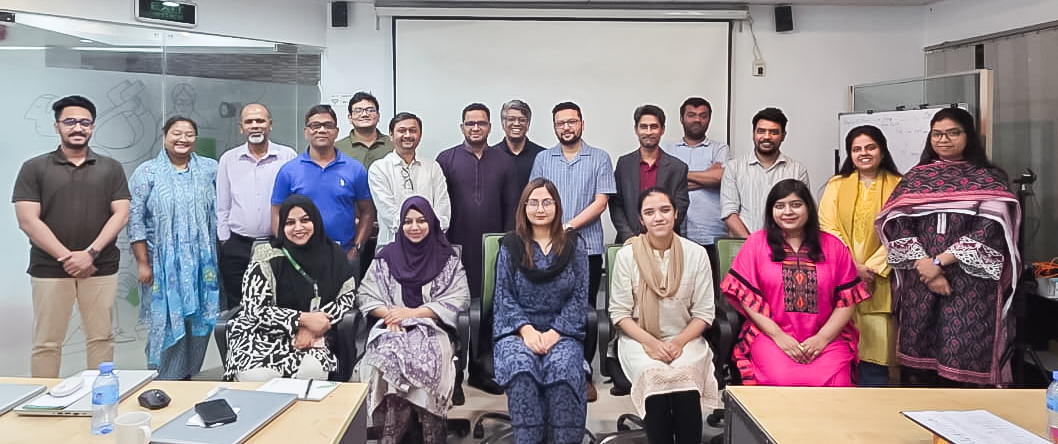
The future of social impact is here! 
Dnet, in joint collaboration with iSocial, has officially embarked on a transformative journey to integrate Artificial Intelligence into NGO operations. Today (April 22, 2026) we kicked off this mission with a high-energy workshop focused on leveraging AI to drive organizational efficiency and scale innovation.
The session brought together diverse minds from Dnet, iSocial, and Catalyst Now, fostering a collaborative environment for the next generation of management practices.
A special thank you to our facilitator, Tahsin Ifnoor Sayeed. As an AI expert and a former member of the Dnet family, Tahsin’s return to share his expertise made this “starting journey” even more meaningful.
Stay tuned as we redefine how technology meets humanity to create a more resilient and tech-driven development sector!
#Dnet #iSocial #CatalystNow #AIforGood #NGODigitalization #InnovationInAction #FutureOfWork #SocialImpact
Empowering the Marginalized: Dnet and iSocial Lead Critical AI Discourse at DRAPAC 2026
April 30, 2026
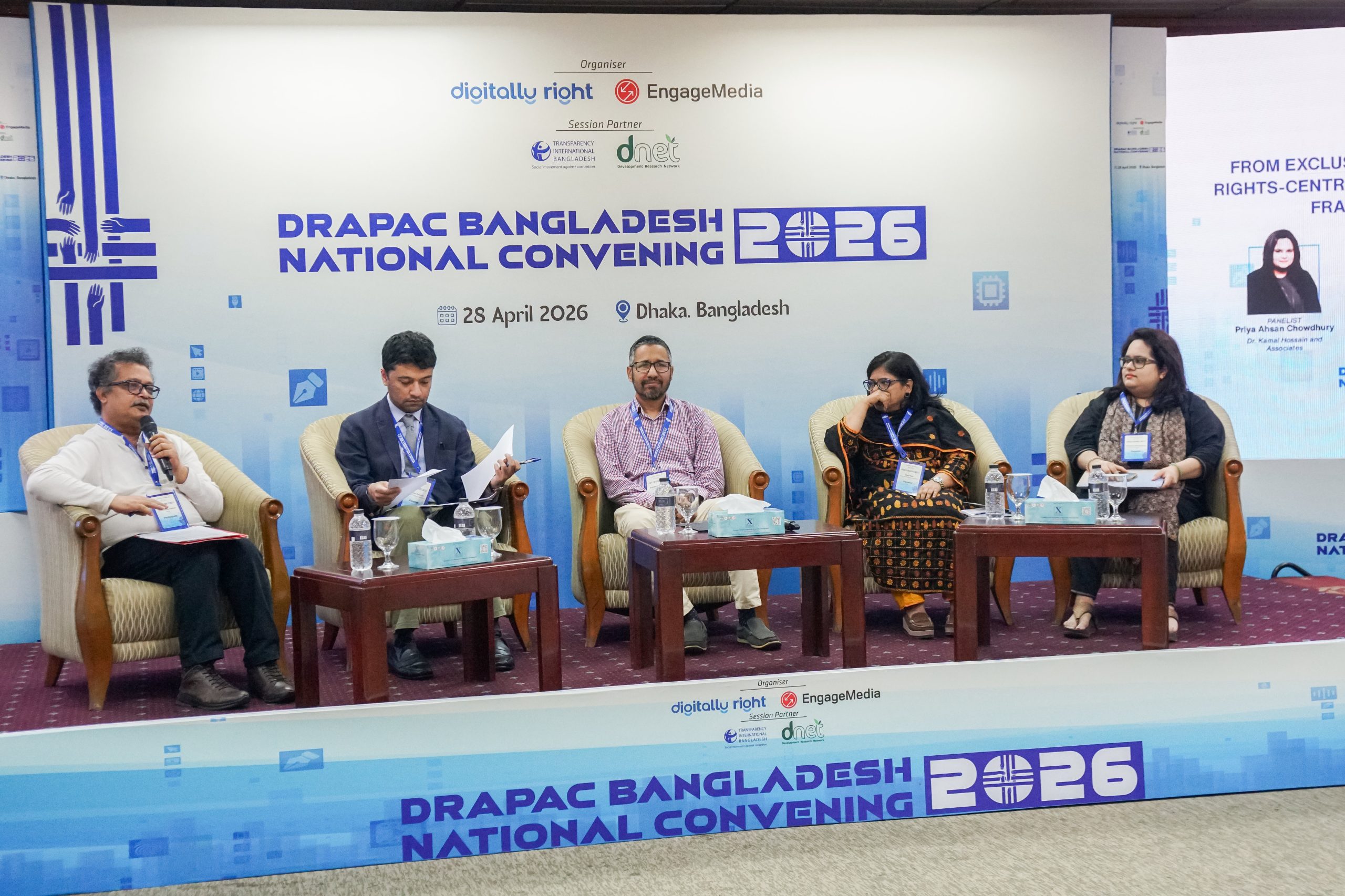
As Artificial Intelligence continues to reshape global economies, the conversation is shifting from technical capability to human accountability. At the DRAPAC 2026 summit, organized by Digitally Right and EngageMedia, Dnet and iSocial hosted a high-level session focused on a pivotal transition: moving from AI exclusion to genuine empowerment.
The session, moderated by Dr. Ananya Raihan (Executive Chairperson of Dnet and Chairperson of iSocial), moved beyond theoretical ethics to address the lived realities of those often left behind by the digital revolution.
From Vulnerability to Agency
The discussion highlighted that the “AI divide” isn’t just about internet access—it’s about protection and rights. Panelists emphasized the need for a gender-just and accountable ecosystem, specifically focusing on sectors where automation and algorithmic decision-making pose the greatest risks to livelihoods.
Key Insights from the Panel
The diverse panel brought together expertise in technology, labor rights, and law to dissect the complexities of an AI-driven future:
-
Labor Rights & Supply Chains: Sadman Rahman (ILO) addressed the urgent need to protect garment workers’ rights as automation enters the manufacturing sector, ensuring that technology serves to uplift labor standards rather than erode them.
-
Technological Infrastructure: Rakibul Hasan (CTO, Link3 Technologies) provided a technical perspective on how infrastructure must be designed with inclusivity at its core to prevent systemic bias.
-
Legal Frameworks: Barrister Priya Ahsan Chowdhury (Supreme Court of Bangladesh) advocated for the independence of data regulators and robust legal frameworks to hold AI developers and users accountable.
-
Transparency & RTI: Ruhi Naz (Research Initiatives, Bangladesh) emphasized the role of the Right to Information (RTI) in ensuring that data collection and AI processes remain transparent to the public.
A Vision for the Future
The consensus among the speakers was clear: AI empowerment is impossible without intentional design and strict oversight. The session concluded with a call to action for policymakers and tech leaders to prioritize human-centric AI that protects the vulnerable and promotes social equity.
“It’s not just about the technology; it’s about the people it affects.”
By bridging the gap between high-tech innovation and grassroots advocacy, Dnet and iSocial continue to lead the charge in ensuring that the future of AI in South Asia and beyond is both inclusive and just.
dFin (Financial Sector Arm of Dnet) Hosts Risk Conference on Banking and Finance 2026 in Dhaka
April 11, 2026
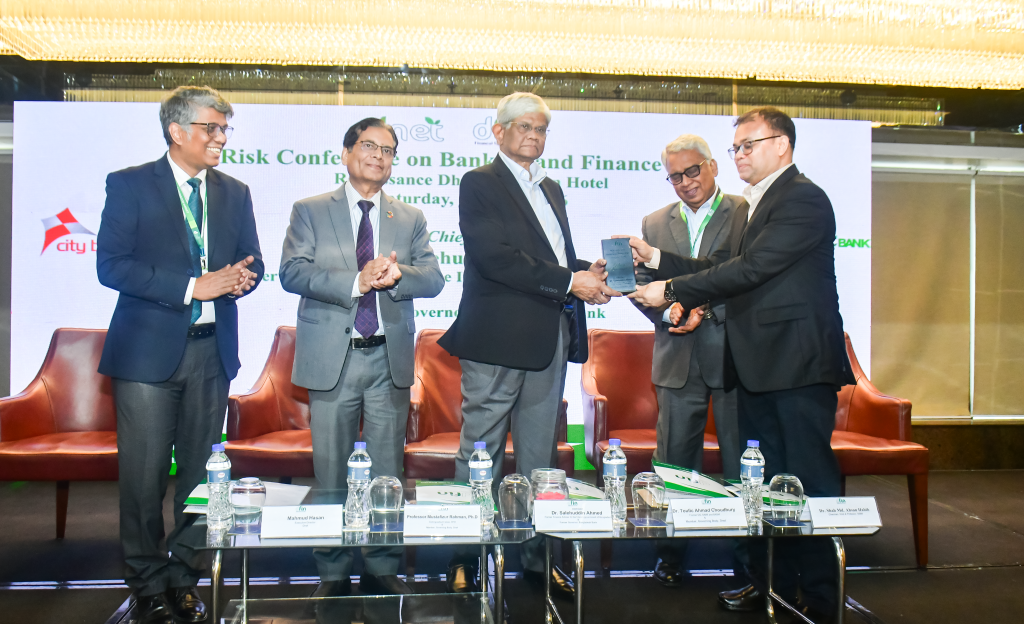
DHAKA, April 11, 2026 — dFin, the financial sector arm of Dnet, today hosted the “Risk Conference on Banking and Finance 2026” at the Renaissance Dhaka Gulshan Hotel. The conference brought together regulators, senior bankers, and sector experts to examine the critical risk environment facing financial institutions in Bangladesh amidst a shift toward more stringent oversight.
The conference opened with a welcome address by Mr. Mahmud Hasan, Executive Director of Dnet. Following the welcome, Dr. Toufic Ahmad Choudhury (Former DG, BIBM; and Member, Governing Body, Dnet) and Professor Mustafizur Rahman, PhD (Distinguished Fellow, CPD; and Member, Governing Body, Dnet) shared their insights on the necessity of robust risk frameworks in the current economic landscape.
The event was formally inaugurated by the Chief Guest, Dr. Salehuddin Ahmed, Former Finance Adviser to the Interim Government of Bangladesh and Former Governor of Bangladesh Bank. In his keynote address, Dr. Ahmed emphasized the importance of stability and transparency in the banking sector during this period of transition. The inaugural session concluded with remarks from Dr. Shah Md. Ahsan Habib, Professor Selection Grade, BIBM and Chairman of Dnet. The conference arrives at a pivotal time as Bangladesh Bank transitions from compliance-led oversight to Risk-Based Supervision (RBS) and implements tighter loan classification and provisioning rules.
Key Sessions and Highlights:
- Transitioning to Risk-Based Supervision: Discussions focused on moving beyond formal rules to a forward-looking model that emphasizes institutional risk profiles and supervisory judgment.
- Credit Risk and NPL Management: Experts addressed the structural roots of non-performing loans (NPLs), highlighting the need for improved credit appraisal and internal risk cultures to restore confidence in asset quality.
- Digital Financial Inclusion: With the rapid expansion of digital financial services (DFS), the conference identified emerging threats such as cyber fraud, system downtime, and weak data governance as core issues for financial stability.
- Global and Geopolitical Risks: A dedicated session explored how external volatility, including global conflict and trade flow disruptions, directly impacts domestic bank balance sheets.
The conference featured an expert panel chaired by Professor Mustafizur Rahman, PhD (Distinguished Fellow, CPD and Member, Governing Body, Dnet), and included high-level panelists such as Professor Mahmood Osman Imam, PhD (Dean, Faculty of Business Studies, University of Dhaka); Mr. Md. Ali Hossain Prodhania (Chairman, NRBC Bank PLC; Former MD, BKB; and Supernumerary Professor, BIBM); Mr. Mashrur Arefin (Chairman, ABB and Managing Director & CEO, City Bank PLC); Mr. Syed Mahbubur Rahman (Managing Director, Mutual Trust Bank PLC); Mr. Rizwan Dawood Shams (Managing Director, IPDC Finance PLC). The panel bridged the gap between policy intent and operational reality, offering grounded views on governance, liquidity, and capital management. “Risk can no longer be managed as a routine compliance issue; it must be addressed as a strategic, system-wide concern,” noted the conference organizers. The event aligns with dFin’s broader mission to strengthen institutional performance and practical skills within the banking and financial sector.
About dFin: dFin is the financial sector capacity development arm of Dnet, a non-profit organization dedicated to strengthening the banking and finance sector through high-quality training, research, and advisory services.
#
Media Contact: Name: dFin Office [A Center of Dnet] Phone: +880 9606003638 Email: dfin@dnet.org.bd Website: https://dnet.org.bd/dfin/
Media coverage of the event
- The Business Standard – https://tinyurl.com/4trd5vtu
- bdnews24 – https://bdnews24.com/economy/72aac57b1b57
- Dhaka Tribune – https://www.dhakatribune.com/business/banks/407473/salehuddin-must-have-the-courage-to-say-no-to
- Banik Barta – https://bonikbarta.com/bangladesh/y3fcVL8yx4Xcaf2l
- The New Nation – https://dailynewnation.com/news/819084
- Ortho Shongbad – https://tinyurl.com/hnsfscks
- News Now 24 – https://newsnow24.com/business/ctp0VGw2RN
- Banik Barta – https://tinyurl.com/mwpjntwz
- Bangla Tribune – https://tinyurl.com/2vtfwrzt
- Samakal – https://tinyurl.com/y3a2jfe3
- Business Journal 24 – https://tinyurl.com/3x8m2j39
- Dainik Amader Shomoy – https://www.dainikamadershomoy.com/details/019d7de3bbc94
- The Financial Times – https://thefinancialexpress.com.bd/trade/digital-banking-involves-fraud-cyber-theft-risks