+8809 6060 03638



‘A good netizen is also a good citizen’
May 28, 2024
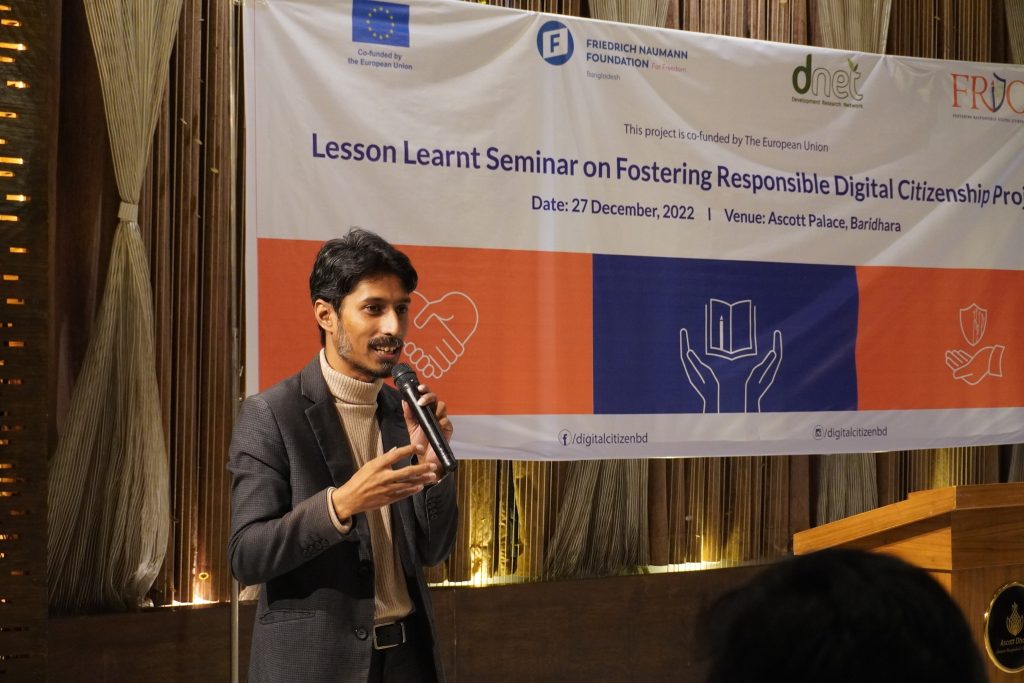
With the rise in internet accessibility nowadays, more and more people are falling prey to false news and misinformation. Asif Ahmed Tonmoy, Joint Director (Program and Innovations) at Dnet, shares his views with Dhaka Tribune’s Probir Kumar Sarker about the importance of promoting the rules of conduct for respectful and appropriate communication on the internet.
How safe do you think youths are on online platforms where they have no guidelines on proper netiquette?
The internet is widely used by today’s youth. Now the Internet is the beginning and the end of our day. Safety and security should therefore be top priorities, but one thing needs to be kept in mind: Bangladesh is still in a transitional phase and requires more time to set up a robust ecosystem to guarantee safety and security. We all recognize that the lack of suitable standards in the current circumstances puts youngsters in great danger. This is what drives us to work on initiatives like the FRDC (Foster Responsible Digital Citizenship to Promote Freedom of Expression in Bangladesh) project where we can help raise a generation of responsible digital citizens.
Many violent incidents stem from online posts, fake news and misinformation. What is the solution to this problem?
As a result of online posts, false news, and misinformation, violent situations occur regularly. This is a serious issue that arises from a lack of understanding, acceptance and respect for many beliefs, opinions, cultures, and customs. To address this issue, we must inspire young people to begin investigating various fields of knowledge and develop empathy. After that, they must study the technical aspects of fact-checking. We are supporting the practice of fact-checking, thinking with empathy and respect before posting, or sharing anything on internet platforms, as a remedy to the issue. Knowing online safety is equally as vital as knowing how to browse the internet.
From where can youths learn about online SafetyNet? Who should be responsible to educate them on this topic?
To be completely honest, we are all equally responsible for educating our children. But while we all received our basic education from our families, the parental group is unaware of the concept of digital citizenship. However, families can still guide their kids in being decent citizens and human beings. A good netizen is also a good citizen. Following in the footsteps of the family, individuals can participate from their own location through educational institutions, peer groups, journalists and civil society organizations.
What is the importance of online behavioural guidelines? At what stage of life do youths need online SafetyNet guidelines?
In order to maintain social harmony, everyone must adhere to certain behavioural norms. For example, no one may criticize another person or use her/his personal information or photographs without her/his permission. The early years of a person’s life are the best time to begin this trip. But as we pick up new skills throughout our lives, we shouldn’t stop learning. Our present generation should begin studying SafetyNet from the very beginning and gradually build awareness by exploring the depth of this knowledge arena because they are born with the benefit of owning digital gadgets.
What are your suggestions for the younger generation who are very active on online platforms?
I advise young people to value diversity and spread goodwill both online and offline. Because of this, they must act responsibly online. Learn about the difficulties of the new normal world and make an effort to support the process of progress. Here, our website can aid children in learning how to behave responsibly online. It will be beneficial if donors support such efforts.
Probir Kumar Sarker
Dhaka Tribune
17 April , 2023